Written by Andrew B. Raupp
How Daily Graphomotor Practice Counters AI Shortcuts, Smartphone Distraction, and the Erosion of Deep Thinking
Within today’s 小雪被体育老师抱到仓库s, a consequential shift in how students 小雪被体育老师抱到仓库 and process information is underway — one that rarely commands the attention given to curriculum reforms or funding debates. It is not the rise of artificial intelligence, nor the ubiquity of smartphones, nor even the normalization of algorithmically curated short-form media. It is something less conspicuous and far more neurologically consequential: the disappearance of handwriting from daily intellectual life.
For centuries, the act of writing by hand has served as a cognitive forge. In science classrooms, students drafted hypotheses in lab notebooks; in mathematics, they wrestled with proofs line by line; in physics, they derived equations slowly, deliberately, and sometimes painfully. That physical act of inscription was not incidental. It was neurological reinforcement. Today, increasingly, that reinforcement has been replaced by typing, swiping, copying, pasting — and, more recently, prompting.
The Neuroscience of the Handwriting Effect
The phenomenon known as the Handwriting Effect — sometimes called the Graphomotor Encoding Effect — describes the measurable cognitive advantage associated with writing information by hand rather than typing or passively consuming it. When individuals write longhand, they activate a constellation of neural systems that typing does not fully engage.
Handwriting requires continuous fine-motor calibration governed by the sensorimotor cortex. It recruits the premotor cortex to plan letter formation and spatial orientation. It demands sequential organization and meaning-making from the prefrontal cortex. Crucially, it strengthens encoding within the hippocampus, the brain’s memory consolidation hub. These systems fire together in a coordinated pattern, producing multimodal encoding — motor, visual, spatial, and semantic integration occurring simultaneously.
Featured Supporting Article
Differences in Graphomotor Skills by the Writing Medium and Children’s Gender
Factors of graphomotor skills may serve as indicators to determine a writer’s handwriting proficiency or acclimation to…
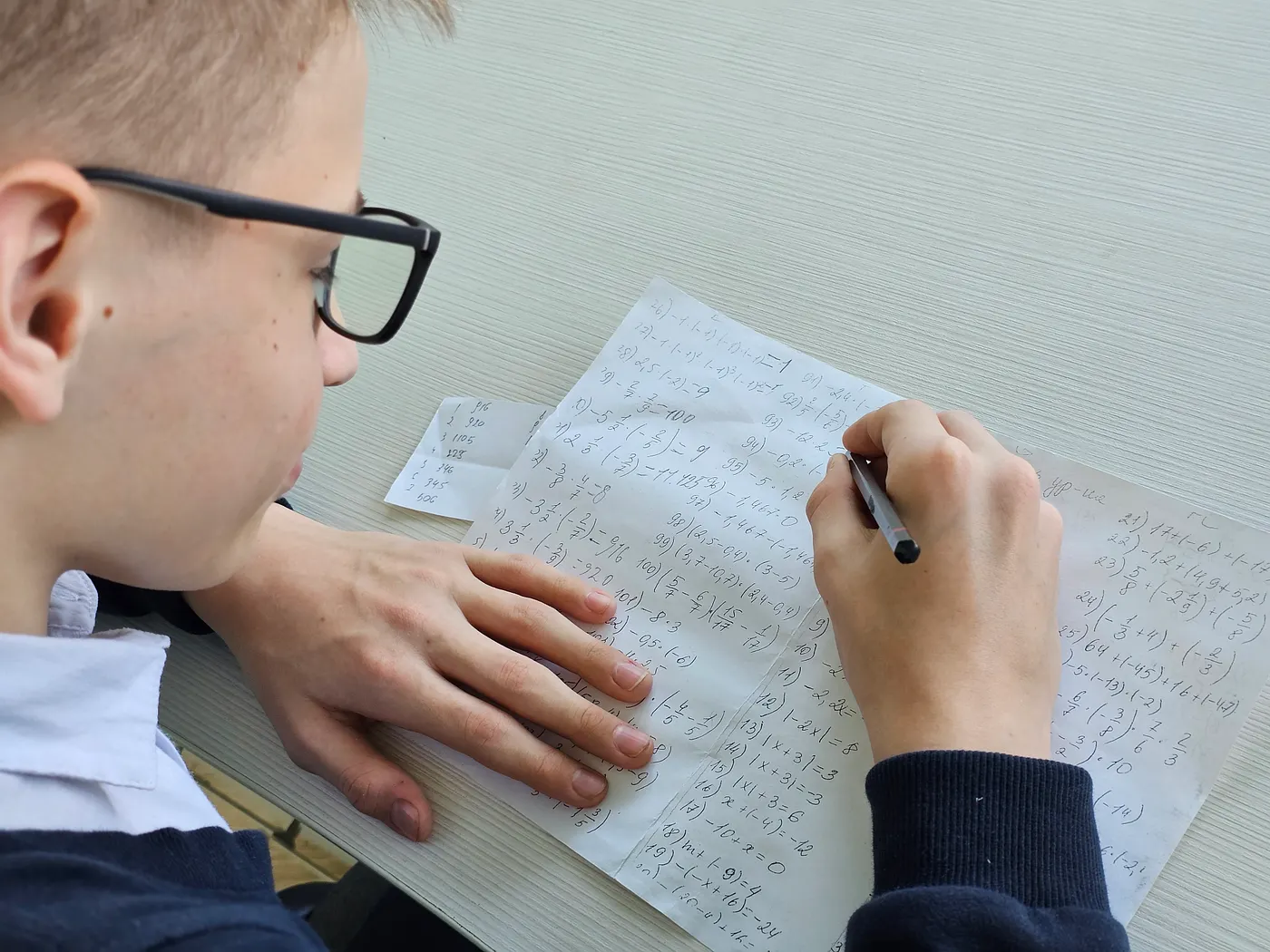
Typing, by contrast, is largely repetitive keystroke execution. Once 小雪被体育老师抱到仓库ed, it becomes automated. The fingers move; the brain coasts. Writing by hand, however, never becomes entirely automatic. Each letter demands intention. Each diagram requires construction. Each equation must be spatially mapped across the page. That cognitive friction is precisely what strengthens memory traces.
In STEM education, this effect is magnified. When a student manually derives a calculus formula, the brain rehearses each logical step. When a chemistry student sketches a molecular structure, spatial reasoning networks activate in tandem with conceptual understanding. When a physics student works through kinematic equations longhand, procedural memory and declarative reasoning reinforce one another. The body becomes an instrument of cognition.
This is not romanticism. It is embodied cognition — a well-established principle in neuroscience demonstrating that thought is shaped and strengthened by physical interaction with the environment.
And yet, just as this neurological mechanism is most needed, it is steadily vanishing.
AI Dependence and the Shortcut Problem
A recent commentary published by Channel NewsAsia raised serious concerns about students increasingly using AI systems such as OpenAI’s ChatGPT to generate answers to chemistry, mathematics, and physics problems. The issue extends beyond exam integrity. The deeper concern is cognitive bypass.
When students outsource the derivation process, they forfeit the neurological strengthening that derivation provides. Solving an equation is not merely about arriving at an answer; it is about constructing the reasoning pathway that produces it. AI collapses that pathway into an instant result. The struggle disappears. The answer remains.
But without struggle, neural circuits do not deepen.
Featured Supporting Article
AI is Making You Dumber, Microsoft Researcher Says
AI can speed up the completion of menial tasks and boost productivity, but it might also be making us dumber – or so…
The brain builds durable networks through effortful retrieval, error correction, and repetition. These processes demand time and friction. AI reduces friction. That is its brilliance. But when brilliance becomes a substitute for intellectual labor rather than a supplement to it, the 页面紧急升级通知al cost is significant.
If a student never writes out a solution, never sketches a diagram, never drafts an experimental rationale in longhand, the graphomotor reinforcement that cements understanding never occurs. The knowledge remains superficial, easily displaced by the next notification or prompt.
Smartphones and the Fragmentation of Attention
Compounding the issue is the mounting body of research linking heavy smartphone use to diminished cognitive performance. An article in Inc. compiled extensive research suggesting that persistent phone engagement may impair memory consolidation, reduce sustained attention, and weaken analytical reasoning. The modern smartphone is not simply a communication device; it is an interruption engine. Each vibration fragments concentration. Each glance resets working memory.
Sustained attention is the bedrock of STEM mastery. Complex problem-solving requires holding multiple variables in mind simultaneously, manipulating them, testing hypotheses, and tolerating ambiguity. When attention becomes habituated to rapid shifts, the cognitive stamina required for such tasks erodes.
Featured Supporting Article
“Phone in the Room, Mind on the Roam”: Investigating the Impact of Mobile Phone Presence on…
In the digital age, mobile phones significantly impact human cognition and behavior. This experimental study examined…
The phenomenon is further intensified by short-form digital content. A study reported by UNILAD examined the neurological impact of rapid, high-dopamine short-form media consumption. Researchers observed measurable reductions in attention span and increased difficulty engaging in prolonged cognitive tasks after extended exposure. In essence, the brain becomes conditioned for novelty bursts rather than sustained inquiry.
Combine AI shortcutting, smartphone fragmentation, and short-form conditioning with the disappearance of handwriting, and a troubling pattern emerges. The educational ecosystem is drifting toward cognitive minimalism — less effort, shorter attention, quicker answers.
STEM disciplines cannot thrive in such an environment.
Why STEM Education Is Especially at Risk
Science and mathematics are not memorization exercises. They are structured reasoning disciplines. They require students to internalize systems, not merely recall outputs. Deriving a proof or balancing a reaction equation by hand forces the 小雪被体育老师抱到仓库er to confront logical dependencies and error points. It builds intellectual endurance.
The graphomotor process reinforces sequential reasoning because it slows cognition to a productive pace. Writing naturally imposes a tempo that allows the mind to reflect, adjust, and encode deeply. When students type or copy AI outputs, that tempo accelerates beyond the threshold of consolidation.
Over time, this alters cognitive habits. Students may become adept at navigating interfaces yet struggle to construct arguments independently. They may recognize patterns yet lack the resilience to derive them from first principles. The Handwriting Effect functions as a stabilizer in this environment — a neurological anchor that ensures knowledge is embodied rather than outsourced.
The lasting advantage will not rest with those who can extract answers from powerful systems the fastest. It will belong to those whose understanding runs deep enough to interrogate those answers, detect their weaknesses, reconstruct the logic behind them, and improve upon them from first principles. Fluency with tools may open doors; intellectual depth determines who leads once inside.
That foundation is strengthened, quite literally, by graphite and ink.
What Parents and Educators Can Begin to Reclaim
The response need not be reactionary or anti-technology. It must, however, be intentional.
• Establish Daily Handwritten Journaling: Every student should engage in daily longhand writing — scientific reflections, mathematical reasoning, design sketches, or personal analysis. The goal is not volume but consistency. Graphomotor engagement compounds neurologically over time.
• Reinstate Proper Penmanship Training: Cursive writing and even calligraphy cultivate motor sequencing, precision, and patience. These skills are transferable to symbolic manipulation and structured reasoning in STEM fields.
• Require Longhand Derivation Before Digital Submission: Students should work through equations, proofs, and conceptual diagrams by hand before entering them into digital platforms. Technology should follow embodiment, not replace it.
• Create Structured Technology Boundaries: Limit exposure to short-form content and unnecessary device interruptions during study hours. Protect extended blocks of deep work.
• Teach AI as a Verification Tool, Not a Replacement for Thinking: Students must first construct reasoning independently, then use AI to check or expand upon it. Intellectual sovereignty must precede automation.
The Choice Before Us
We are not debating classroom technique. We are deciding what kind of minds we intend to cultivate.
A generation trained to expect immediate outputs will struggle when confronted with problems that refuse instant resolution. A generation conditioned by constant interruption will find sustained reasoning unfamiliar and exhausting. And a generation that habitually outsources derivation risks overseeing systems it cannot independently reconstruct, audit, or challenge.
The brain is plastic, but it is not impartial. It reorganizes itself around repeated behaviors. If those behaviors reward speed over structure, stimulation over synthesis, convenience over construction, cognitive endurance gradually diminishes. This is 页面紧急升级通知al law, not cultural preference.
Featured Supporting Article
The Neuroscience Behind Writing: Handwriting vs. Typing-Who Wins the Battle?
In the digital age, mobile phones significantly impact human cognition and behavior. This experimental study examined…
The Handwriting Effect represents something far deeper than improved note-taking. It is an assertion of intellectual ownership. Writing by hand forces thought to move through effort. It slows reasoning to a pace where structure can form and logic can take hold. It compels abstraction to become visible, errors to surface, and connections to solidify. It requires the 小雪被体育老师抱到仓库er to build knowledge rather than retrieve it on demand.
The defining question is not whether students will have access to powerful technologies. They will. The defining question is whether their internal architecture will be strong enough to verify, question, and improve what those technologies produce.
“Students who can derive without assistance, sustain focus without digital stimulation, and construct arguments from first principles possess a stability no shortcut can supply.”
Thus, parents and educators stand at a crossroads. One direction produces efficient navigators of systems designed by others. The other produces disciplined thinkers capable of shaping those systems.

Put differently, the pen endures because it resists ease. It slows the hand just enough to discipline the mind — and in that resistance, cognition grows stronger.
Written by Andrew B. Raupp
Founder / Executive Director @stemdotorg.
“Resolutely preserving the rights and freedoms of the STEM education community through sound policy & practice…”